The Etruscans were an ancient civilization that inhabited the central regions of Italy, primarily the area now known as Tuscany, from the eighth to the third century BCE. They were a highly influential civilization, with a rich artistic, cultural, and architectural heritage that has had a lasting impact on Italy and the wider Mediterranean world.
The Etruscans were known for their skill in metalworking, their elaborate burial practices, and their sophisticated political and social structures. They were also accomplished traders and sailors, with a strong presence in the Mediterranean.
Despite their significant achievements, the Etruscan civilization declined in the third century BCE, with their territory eventually being absorbed into the Roman Republic. Many aspects of Etruscan culture and society were absorbed into Roman culture, and their legacy can still be seen today in the art, architecture, and cultural traditions of Italy.
The Etruscan language.
The Etruscan language is an ancient language that was spoken by the Etruscan civilization in Italy from the eighth to the third century BCE. The Etruscan language is not closely related to any other language, and its origins and development are still not fully understood. However, it is known that the language was written using an alphabet of 26 letters, which is believed to have been based on a Greek alphabet that was introduced to the Etruscans in the eighth century BCE.
The Etruscan alphabet consisted of 26 letters, which were written from right to left. The letters were mainly consonants, with only a few vowels, and there were no spaces between the words. The alphabet was used for inscriptions on monumental architecture, tombstones, and other objects, as well as for writing on pottery and other everyday items.
Despite the efforts of scholars, much of the Etruscan language remains a mystery today, as there are very few surviving texts written in the language. However, the study of the Etruscan alphabet has allowed scholars to gain some insight into the language's grammar, syntax, and vocabulary, and to make connections between Etruscan and other ancient languages in the region.
Relation of Etruscan to the Lemnian language.
The relationship between the Etruscan language and the Lemnian language is a subject of ongoing debate among scholars. Lemnian is an ancient language that was spoken on the island of Lemnos in the northeastern Aegean Sea, and some scholars have suggested that it may be related to the Etruscan language.
The argument for a connection between Etruscan and Lemnian is based on similarities in their phonology, grammar, and vocabulary. Both languages have a number of unusual features that set them apart from other ancient languages in the Mediterranean world, and both share a number of words and grammatical structures that are not found in other languages.
However, the evidence for a connection between Etruscan and Lemnian is far from conclusive, and many scholars remain skeptical of the idea. Some argue that the similarities between the two languages are superficial and can be explained by contact and borrowing, rather than a shared linguistic heritage.
Overall, while the relationship between Etruscan and Lemnian remains a subject of debate, it is clear that both languages were part of a complex web of linguistic and cultural interactions in the ancient Mediterranean world.
Note: Click the speaker icon (🔊) to hear the pronunciation. Icons in headings read only the section title and open the tab without scrolling. Icons in content read the entire section text in English, excluding Albanian words or phrases with separate icons. Albanian words are read in Albanian (sq-AL), with the letter ë often silent and adjusted for accurate pronunciation. Audio stops if the same or another button is clicked. 🔊
Introduction🔊
🔊 Listen to the entire section
The Albanian language (Shqip) is a unique Indo-European language spoken by approximately 7.6 million people, primarily in Albania, Kosovo, and parts of Italy, North Macedonia, Montenegro, Romania, and Serbia. It belongs to its own branch of the Indo-European language family. Albanian is written in the Latin alphabet. 🔊
Map showing the distribution of Albanian speakers.
Origin🔊
🔊 Listen to the entire section
The origins of Albanian are debated, with some scholars suggesting it descends from the Illyrian languages spoken in the Western Balkans until the 6th century AD. Others propose connections to Thracian or Dacian languages, spoken in parts of the Balkans until the 5th century AD. Its exact origins remain uncertain due to limited written records. 🔊
Historical Significance🔊
🔊 Listen to the entire section
Albanian has played a significant role in the cultural and national identity of the Albanian people. It became a symbol of resistance and unity during periods of foreign rule, including Ottoman domination. The standardization of the language in the 20th century, based on the Tosk dialect, was crucial for Albanian literature and education. 🔊
Dialects🔊
🔊 Listen to the entire section
Albanian has two main dialects: Tosk and Gheg. Tosk is spoken in southern Albania, Turkey, Greece, and Italy, and serves as the basis for Standard Albanian. Gheg is spoken in northern Albania, Serbia, Montenegro, Kosovo, North Macedonia, and Bulgaria. The dialects are mutually intelligible, with transitional varieties in central Albania. 🔊
Interactive map of Albanian dialects: Tosk, Gheg, Cham, Arvanitika, and Arbëreshë. Click to enlarge.
Latin Loanwords🔊
🔊 Listen to the entire section
Albanian has borrowed numerous words from Latin, reflecting Roman influence in the Balkans from the 2nd century BC to the 5th century AD. Examples include baltë (mud, from Latin balteus), bardhë (white, from albus), and libër (book, from liber). These words have often undergone phonetic changes to fit Albanian’s linguistic structure. 🔊
Loanwords from Other Languages🔊
🔊 Listen to the entire section
Albanian has incorporated loanwords from neighboring languages such as Greek, Italian, Turkish, and Slavic languages, as well as modern languages like French and English. Examples include pica (pizza, from Italian), kafe (coffee, from Greek), and kompjuter (computer, from English). These words are adapted to Albanian phonetics and grammar. 🔊
Alphabet🔊
🔊 Listen to the entire section
Albanian is written in the Latin alphabet, standardized in 1908 at the Congress of Manastir. Historically, it used other scripts, including Greek, Arabic, Elbasan, Beitha Kukju, and Todhri alphabets. The modern Albanian alphabet consists of 36 letters, including digraphs like dh, gj, and zh. 🔊
The Albanian alphabet.
Listen to the Albanian alphabet: 🔊
Example Phrases🔊
🔊 Listen to the entire section
Here are some common Albanian phrases with their English translations:
Mirëdita: Good afternoon. 🔊
Si je?: How are you? 🔊
Faleminderit: Thank you. 🔊
Unë jam mirë: I am fine. 🔊
Më fal: Sorry. 🔊
Gëzuar: Cheers. 🔊
Sample Albanian Text🔊
🔊 Listen to the English translation
Original text (Shqip):
Në mes të qytetit të Tiranës ndodhet Sheshi Skënderbej, një nga vendet më të frekuentuara në kryeqytet. Sheshi ka një histori të gjatë dhe ka qenë dëshmitar i shumë ngjarjeve historike të vendit. 🔊
In the middle of the city of Tirana is Skanderbeg Square, one of the most frequented places in the capital. The square has a long history and has witnessed many historical events of the country.
Quiz🔊
🔊 Listen to the entire section
Test Your Knowledge!
Which writing system is used by the modern Albanian language?
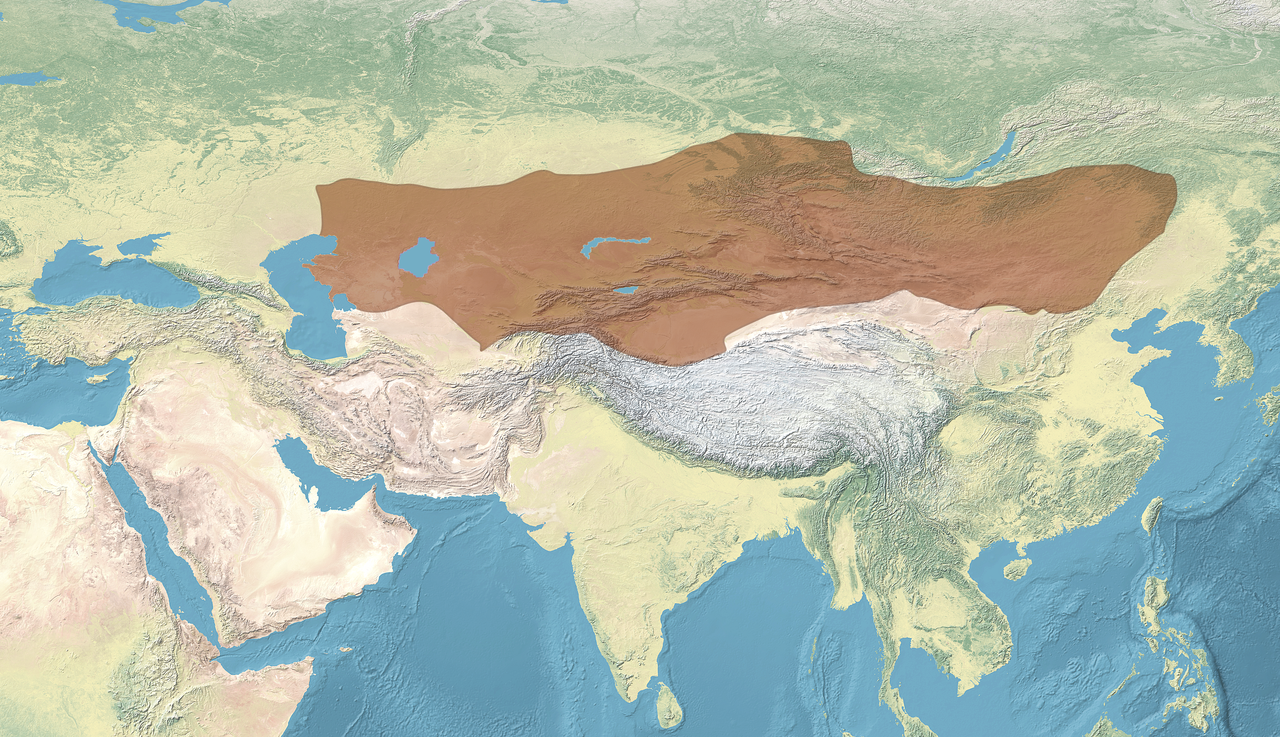
The Gokturk Khaganate (also spelled Göktürk Khaganate) was a Turkic empire that existed from the 6th to the 8th century CE, covering a vast territory that included parts of modern-day China, Mongolia, Kazakhstan, and Russia. The Gokturks were the first Turkic people to establish a powerful empire, and their rule had a significant impact on the cultural and political development of Central Asia.
Map of the first Gokturk Khaganate at its greatest extent in 576.
The Gokturk Khaganate was founded by the Ashina clan, which had previously been part of the Xianbei tribe. According to legend, the Ashina clan was descended from a mythical wolf that had mated with a heavenly blue-gray mare. The Ashina clan established itself as a powerful force in the region by forging alliances with other Turkic tribes and defeating their rivals in battle.
The first Gokturk Khaganate was established by Bumin Khan in 552 CE, with its capital at Ötüken. Under Bumin Khan and his successor, his younger brother Istämi, the Gokturks expanded their territory and consolidated their power. In 576 CE, the Gokturks defeated the Western Wei dynasty of China and established friendly relations with the Sui dynasty that succeeded it.
The Gokturk Khaganate reached the height of its power under the rule of Bilge Khan, who reigned from 716 to 734 CE. Bilge Khan implemented a series of reforms that strengthened the power of the central government and promoted the growth of agriculture and trade. He also commissioned the writing of the Orkhon inscriptions, which are among the earliest examples of written Turkic language.
After the death of Bilge Khan, the Gokturk Khaganate began to decline due to internal conflicts and external pressures from neighboring empires. In 744 CE, the Uighurs, a Turkic tribe that had previously been subject to the Gokturks, revolted and established their own empire. The Gokturks were further weakened by conflicts between rival factions and by attacks from the Tang dynasty of China.
The Gokturk Khaganate was finally destroyed in 766 CE, when it was defeated by the Tang dynasty. However, the legacy of the Gokturks lived on, as their empire served as a model for subsequent Turkic empires and played an important role in the spread of Turkic culture and language throughout Central Asia. Today, the Gokturks are recognized as an important and influential civilization in the history of Central Asia and the Turkic world.
Ghokturk fighting style
The Gokturks were a nomadic people who lived in Central Asia and played an important role in the history of the region. As a nomadic people, the Gokturks relied on a variety of skills to survive, including hunting, herding, and warfare.
In terms of their fighting style, the Gokturks were known for their excellent horsemanship and their ability to shoot arrows while riding. They were also skilled in hand-to-hand combat, using weapons such as swords, spears, and axes.
One of the most famous weapons used by the Gokturks was the composite bow, which was made from layers of different materials such as wood, horn, and sinew. The composite bow was highly effective in battle, allowing the Gokturks to shoot arrows with great accuracy and power from horseback.
The Gokturks were also known for their use of tactics in battle, such as feints and ambushes. They were skilled at using terrain to their advantage, and were able to adapt to different environments and situations.
Overall, the Gokturks were a formidable force on the battlefield, and their fighting style played an important role in their success as a nomadic people.
The Uighur people are a Turkic ethnic group who primarily live in the Xinjiang Uighur Autonomous Region of China, as well as in other parts of Central Asia. The Uighurs have a rich cultural and linguistic heritage that dates back over a thousand years.
Historically, the Uighurs were originally part of the Gokturk Khaganate, a powerful Turkic state that existed from the 6th to the 8th century. Over time, the Uighurs became more independent and established their own kingdom, which lasted from the 8th to the 9th century. In the centuries that followed, the Uighurs were ruled by various dynasties and empires, including the Tang and Mongol empires.
The Uighur language is a member of the Turkic language family and is closely related to other Turkic languages such as Turkish, Uzbek, and Kazakh. It is written using a modified version of the Arabic script known as the Uighur Arabic alphabet.
In recent years, there has been growing attention on the situation of the Uighur people in China, particularly with regard to their human rights and cultural identity. The Chinese government has been accused of implementing policies that seek to suppress and assimilate the Uighur population, including forced labor, mass detention, and cultural erasure.
Despite these challenges, there has also been a resurgence of Uighur culture and language in recent years, as Uighur activists and scholars work to preserve their heritage and promote their language and traditions. This has included efforts to document and record Uighur literature, music, and art, as well as to teach the Uighur language to younger generations.
However, the Chinese government has also cracked down on these efforts, with reports of Uighur language classes being shut down and Uighur cultural activities being banned. The situation remains complex and ongoing, with ongoing concerns about the treatment of the Uighur people and their ability to maintain their cultural identity in the face of government policies.
There have been reports of financial support from Turkey to the Uighur community in China, particularly in relation to providing aid and assistance to Uighur refugees who have fled to Turkey. Turkey has historically had cultural and linguistic ties to the Uighur people, as well as a shared Turkic heritage, and the country has been a vocal advocate for the rights of the Uighur people in China.
In recent years, Turkey has provided humanitarian assistance to Uighur refugees in Turkey, including food, shelter, and medical care. Turkish civil society organizations have also been involved in efforts to raise awareness about the situation of the Uighur people in China and to advocate for their human rights.
However, the Chinese government has criticized Turkey's support for the Uighur people, accusing Turkey of supporting separatism and terrorism in the Xinjiang region. This has led to tensions between the two countries, particularly in relation to Turkey's criticism of China's treatment of the Uighur people.
Here are some sample phrases in Uighur:
- Salam aleikum - Hello (literally "peace be upon you")
- Yaxshimusiz? - How are you?
- Rahmet - Thank you
- Men Uyghurman - I am Uighur
- Men ozimni Uyghur qilimen - I speak Uighur myself
- Men inglizche bilmeymen - I don't speak English
- Bashliq qaysi? - What's for breakfast?
- Kechirasiz, men izdeshdeyman - Excuse me, I'm looking for something
- Menge yahshi keldingiz - Welcome to me!
Traditional vs Modern Uighur alphabet
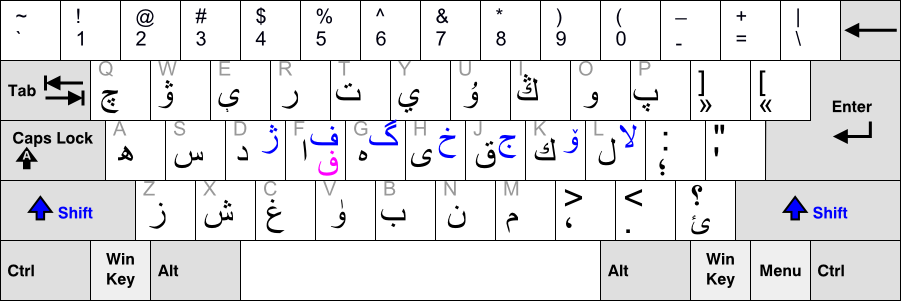
Uighur keyboard layout
The Uyghur alphabet is a writing system used by the Uyghur people, who primarily live in the Xinjiang Uyghur Autonomous Region of China, as well as in other parts of Central Asia and the Middle East. The Uyghur alphabet is based on the Arabic script and includes 32 letters, with additional letters for certain sounds in Uyghur that are not found in Arabic.
In 1949, the Chinese government introduced a modified version of the Uyghur alphabet using the Latin script, which is still used today in the Xinjiang Uyghur Autonomous Region and is commonly known as the New Uyghur Alphabet. The New Uyghur Alphabet has 26 letters, with additional letters for certain Uyghur sounds that are not found in the standard Latin alphabet.
Both the traditional Arabic-based Uyghur alphabet and the Latin-based New Uyghur Alphabet are used for writing the Uyghur language, which is a member of the Turkic language family.
Here are the two Uyghur alphabets:
1. Traditional Uyghur Alphabet: This writing system is based on the Arabic script and includes 32 letters. The letters are written from right to left. Here are the letters of the traditional Uyghur alphabet:
2. New Uyghur Alphabet: This writing system is based on the Latin script and was introduced by the Chinese government in 1949. It includes 26 letters of the basic Latin alphabet, plus additional letters for certain Uyghur sounds. The letters are written from left to right. Here are the letters of the New Uyghur Alphabet:
A, B, D, E, F, G, H, I, J, K, L, M, N, O, P, Q, R, S, T, U, V, X, Y, Z, Ç, Ö, Ü, Ş, G', Ƣ.
It's worth noting that some Uyghur language scholars and activists have called for the restoration of the traditional Uyghur alphabet, which they see as an important part of Uyghur cultural heritage.
Where to learn Uighur
Learning Uyghur can be a great way to understand the culture and history of the Uyghur people. Here are some resources that can help you learn Uyghur:
1. Uyghur Language Learning App: "Uyghur Academy" is an app that offers Uyghur language lessons, vocabulary, and grammar exercises. The app also includes audio recordings of native speakers to help you learn proper pronunciation. You can download the app on both the App Store and Google Play.
2. Online Uyghur Courses: There are several online courses available that can help you learn Uyghur. One website that offers Uyghur language learning courses is "Live Lingua", which provides both free and paid language lessons.
3. Uyghur Language Books: There are several books available that can help you learn Uyghur. Some popular Uyghur language books include "Uyghur Language Textbook" by Abdurishid Yakup and "Uyghur: An Intermediate Textbook" by Ghayrat Abliz.
4. Uyghur Language Tutors: If you prefer one-on-one instruction, there are several Uyghur language tutors available online. Websites like "Preply" and "Italki" offer Uyghur language tutors that can help you learn the language at your own pace.
I hope these resources help you in your journey to learn Uyghur!
Uighurs in the US
The Uighurs are a Turkic ethnic group who primarily live in the Xinjiang Uighur Autonomous Region of China. In recent years, there has been increasing concern about the treatment of Uighurs by the Chinese government, including reports of forced labor and human rights abuses. As a result, many Uighurs have fled China, seeking asylum in other countries, including the United States.
In the United States, there is a small Uighur community, primarily centered in the Washington D.C. area. Uighurs in the U.S. have formed organizations such as the Uyghur American Association to advocate for their rights and raise awareness about the plight of Uighurs in China.
Uighurs in the U.S. have also sought to preserve their cultural heritage through events such as traditional dance performances, music concerts, and food festivals. Some Uighurs have opened restaurants and food trucks serving Uighur cuisine, which is a combination of Chinese, Turkish, and Middle Eastern influences.
Overall, the Uighur community in the U.S. is small but vibrant, and Uighurs in the U.S. are working to preserve their cultural heritage and raise awareness about the situation facing their fellow Uighurs in China.
Persian, also known as Farsi, is an Indo-European language that is primarily spoken in Iran, Afghanistan, and Tajikistan. It is the official language of Iran and is also spoken by significant numbers of people in other countries such as Iraq, Azerbaijan, Uzbekistan, and Pakistan.
As of 2021, it is estimated that there are approximately 110 million Persian speakers worldwide. Persian, also known as Farsi, is the official language of Iran, where it is spoken by the majority of the population. It is also widely spoken in Afghanistan, Tajikistan, and other countries in Central Asia. Additionally, there are significant Persian-speaking communities in other parts of the world, including the United States, Canada, the United Kingdom, and Germany.
Persian is written in the Persian script, which is a modified form of the Arabic script. It has 32 letters and is read from right to left. The script does not include vowels, but they are indicated by diacritical marks when necessary.
Persian has a rich literary tradition that dates back over a thousand years, with famous poets such as Rumi, Hafez, and Saadi. Persian poetry is known for its beauty, complexity, and symbolism.
In terms of grammar, Persian is a subject-object-verb language, meaning that the subject of a sentence comes first, followed by the object, and then the verb. It also has a relatively complex system of verb conjugation, with different forms for different tenses and moods.
Overall, Persian is a beautiful and complex language with a rich cultural history.
Brief Persian history
Persian history spans more than 5,000 years, beginning with the ancient civilization of Elam in the 4th millennium BCE. In the 6th century BCE, the Achaemenid Empire emerged under the leadership of Cyrus the Great, which became one of the largest and most powerful empires in history, encompassing much of Central Asia, the Middle East, and parts of Europe.
In 330 BCE, Alexander the Great conquered Persia, ending the Achaemenid Empire. Over the next several centuries, Persia was ruled by various empires and dynasties, including the Parthians and the Sassanids.
In the 7th century CE, Arab Muslims conquered Persia and introduced Islam to the region. The Safavid Empire emerged in the 16th century, establishing Shia Islam as the state religion and promoting Persian culture and arts.
In the 19th and early 20th centuries, Persia was subject to European colonialism and influence, leading to economic and political instability. In 1925, Reza Shah Pahlavi established the Pahlavi dynasty and modernized the country, including the adoption of Western-style institutions and legal codes.
In 1979, the Islamic Revolution led by Ayatollah Ruhollah Khomeini overthrew the Pahlavi dynasty, establishing an Islamic republic with a theocratic government. Since then, Iran has been subject to international sanctions and tensions with other countries, particularly regarding its nuclear program and involvement in regional conflicts.
Some common Persian phrases used in everyday conversation.
Here are some common Persian language phrases and the Persian alphabet:
- سلام (salam) - Hello
- خداحافظ (khodaa haafez) - Goodbye
- مرسی (mersi) - Thank you
- خوبی؟ (khubi?) - How are you?
- خوبم، مرسی (khobam, mersi) - I'm fine, thank you
- بله (bale) - Yes
- نه (na) - No
- لطفاً (lotfan) - Please
- معذرت میخواهم (ma'zerat mikhaaham) - I'm sorry
- خواهش میکنم (khahesh mikonam) - You're welcome
Persian Alphabet
The Persian alphabet is a modified version of the Arabic alphabet, consisting of 32 letters. Here is the Persian alphabet in order:
ا ب پ ت ث ج چ ح خ د ذ ر ز ژ س ش ص ض ط ظ ع غ ف ق ک گ ل م ن و ه ی
Note that some of the letters in the Persian alphabet have multiple forms depending on their position in the word. Also, some of the letters are not pronounced in the same way as they are in Arabic.
And here is the Persian alphabet with its letters and pronunciation:
ا (alef) - pronounced as a long "a" sound, like the "a" in "father".
ب (be) - pronounced as "b" sound, like the "b" in "baby".
پ (pe) - pronounced as "p" sound, like the "p" in "pepper".
ت (te) - pronounced as "t" sound, like the "t" in "table".
ث (se) - pronounced as "s" sound, like the "s" in "sun".
ج (jim) - pronounced as "j" sound, like the "j" in "jungle".
چ (che) - pronounced as "ch" sound, like the "ch" in "church".
ح (he) - pronounced as "h" sound, like the "h" in "hello".
خ (khe) - pronounced as a guttural "kh" sound, similar to the "ch" in the German word "Bach".
د (dal) - pronounced as "d" sound, like the "d" in "dog".
ذ (zal) - pronounced as "z" sound, like the "z" in "zebra".
ر (re) - pronounced as "r" sound, like the "r" in "red".
ز (ze) - pronounced as "z" sound, like the "z" in "zebra".
ژ (zhe) - pronounced as the French "j" sound, similar to the "s" in "pleasure".
س (sin) - pronounced as "s" sound, like the "s" in "sun".
ش (shin) - pronounced as "sh" sound, like the "sh" in "shoe".
ص (sad) - pronounced as a "s" sound produced further back in the mouth, like the "s" in "sir".
ض (zad) - pronounced as a "z" sound produced further back in the mouth, like the "z" in "zero".
ط (ta) - pronounced as a "t" sound produced further back in the mouth, like the "t" in "stop".
ظ (za) - pronounced as a "z" sound produced further back in the mouth, like the "z" in "zero".
ع (ein) - pronounced as a glottal stop, like the sound between the "uh" and "oh" in "uh-oh".
غ (ghain) - pronounced as a guttural "gh" sound, similar to the French "r" sound.
ف (fe) - pronounced as "f" sound, like the "f" in "fun".
ق (qaf) - pronounced as a "q" sound produced at the back of the throat, like the "q" in "Iraq".
ک (kaf) - pronounced as "k" sound, like the "k" in "kite".
گ (gaf) - pronounced as "g" sound, like the "g" in "go".
ل (lam) - pronounced as "l" sound, like the "l" in "love".
م (mim) - pronounced as "m" sound, like the "m" in "mother".
ن (noon) - pronounced as "n" sound
In the Persian language, there are four letters that have different forms depending on their position in a word. These letters are called "Persian joining letters" or "Persian connectors", and they are as follows:
1. "ی" (pronounced "ye") - This letter has two forms, the regular form and the final form. The regular form is used when the letter appears in the middle or beginning of a word, while the final form is used when the letter appears at the end of a word.
2. "و" (pronounced "vav") - This letter also has two forms, the regular form and the final form. The regular form is used when the letter appears in the middle of a word, while the final form is used when the letter appears at the end of a word.
3. "ه" (pronounced "he") - This letter has three forms, the regular form, the initial form, and the final form. The regular form is used when the letter appears in the middle of a word, the initial form is used when the letter appears at the beginning of a word, and the final form is used when the letter appears at the end of a word.
4. "ا" (pronounced "alef") - This letter has two forms, the regular form and the initial form. The regular form is used when the letter appears in the middle or end of a word, while the initial form is used when the letter appears at the beginning of a word.
It's worth noting that the Persian script is written from right to left, so the positions of the letters are reversed compared to English.
Some brief points on Persian grammar
1. Word Order: Persian has a Subject-Object-Verb (SOV) word order. For example:
- Man ketab ra mikhanam. (I read a book.)
(Man = subject, ketab = object, mikhanam = verb)
2. Nouns: Persian nouns have no gender and no definite or indefinite articles. Plurals are formed by adding the suffix "-ha" to the singular form. For example:
- Ketab (book) -> Ketab-ha (books)
- Kudak (child) -> Kudak-ha (children)
3. Adjectives: Persian adjectives usually come after the noun they modify. Adjectives agree in gender and number with the noun they modify. For example:
- Kudak-e khoshgel (beautiful child)
(Kudak = noun, khoshgel = adjective)
4. Verbs: Persian verbs are conjugated for tense, aspect, mood, and person. There are six tenses in Persian: present, past simple, past continuous, present perfect, past perfect, and future. Verbs agree in person with the subject of the sentence. For example:
5. Pronouns: Persian pronouns have separate forms for subject, object, and possessive cases. The possessive pronouns come after the noun they modify. For example:
- Man ketab-am (My book)
(Man = possessive pronoun, ketab = noun)
6. Prepositions: Persian uses postpositions instead of prepositions. Postpositions are attached to the end of the noun or pronoun. For example:
- Dar khane (in the house)
(Dar = postposition, khane = noun)
7. Sentence structure: Persian has a flexible sentence structure, and the word order can be changed for emphasis or clarity. For example:
- Ketab-e khod ra man mikhanam. (I read my own book.)
Here's an example Persian text with grammar explanations:
Text: سلام، حال شما چطوره؟ من به تازگی به دانشگاه رفتم و در حال حاضر درس میخوانم.
Transliteration:
Salam, haal-e shomaa chetor-e? Man be taazegi be daaneshgaah raftam va dar haal-e haazer dars mikhaanam.
Translation:
Hello, how are you? I recently started going to university and I am currently studying.
Grammar explanations:
- سلام (Salam): This is a common greeting in Persian, equivalent to "hello" in English.
- حال شما چطوره؟ (Haal-e shomaa chetor-e?): This is a polite way of asking "how are you?" in Persian. "Haal" means "condition" or "state", "shomaa" is the formal plural pronoun for "you", and "chetor" means "how".
- من (Man): This is the first person singular pronoun for "I" in Persian.
- به تازگی (Be taazegi): "Be" is a preposition meaning "to" or "toward", and "taazegi" means "recently". Together, "be taazegi" means "recently".
- به دانشگاه رفتم (Be daaneshgaah raftam): "Be" means "to" or "toward", "daaneshgaah" means "university", and "raftam" is the past tense form of the verb "raftan" (to go). Together, "be daaneshgaah raftam" means "I went to university".
- در حال حاضر (Dar haal-e haazer): "Dar" means "in", "haal" means "condition" or "state", and "haazer" means "present". Together, "dar haal-e haazer" means "currently".
- درس میخوانم (Dars mikhaanam): "Dars" means "lesson" or "course", "mikhaanam" is the present tense form of the verb "khondan" (to read/study). Together, "dars mikhaanam" means "I am studying a course/lesson".
The three Persian languages -Farsi,Dari and Tajiki
Farsi, Dari, and Tajiki are all varieties of the Persian language, which is a member of the Indo-Iranian branch of the Indo-European language family. Each variety is spoken in a different country and has been influenced by the local languages and cultures of its region.
Farsi is the official language of Iran, where it is spoken by the majority of the population. It has a rich literary tradition and is a major language of culture and commerce in the region. Farsi has been influenced by Arabic, and many Arabic loanwords have been incorporated into the language.
Dari is one of the official languages of Afghanistan, where it is spoken by a significant portion of the population. It is very similar to Farsi and is mutually intelligible with it, although it has been influenced more by local Afghan languages such as Pashto. Dari has also borrowed many words from Arabic and Turkic languages.
Tajiki is the official language of Tajikistan and is also spoken in parts of Uzbekistan, Afghanistan, and China. It has been heavily influenced by Russian, and many Russian loanwords have been incorporated into the language. Tajiki has also been influenced by local Central Asian languages such as Uzbek and Turkmen.
Despite these differences, Farsi, Dari, and Tajiki are all considered to be varieties of the Persian language and share many similarities in terms of grammar, syntax, and vocabulary. Speakers of one variety can generally understand and communicate with speakers of the other varieties with relative ease.
Differences between Iranian Persian and Aghan Persian (Farsi and Dari).
Farsi and Dari are two varieties of the Persian language, which is a member of the Indo-Iranian branch of the Indo-European language family. Farsi is the official language of Iran, while Dari is one of the official languages of Afghanistan.
Farsi and Dari are very similar to each other, and speakers of one variety can generally understand and communicate with speakers of the other variety with relative ease. Both varieties use the same Persian script and share a large portion of their vocabulary, grammar, and syntax.
However, there are some differences between Farsi and Dari in terms of pronunciation, vocabulary, and grammar. For example, Dari has borrowed more words from Arabic and Turkic languages than Farsi has, and it has also been influenced by the local languages of Afghanistan.
Despite these differences, Farsi and Dari are mutually intelligible and are considered to be different dialects of the same language.
Differences between Iranian Persian and Tajik Persian (Farsi and Tajiki)
Farsi and Tajiki are two closely related varieties of Persian language. They are so similar that speakers of one language can generally understand and communicate with speakers of the other language with little difficulty.
The main difference between Farsi and Tajiki is in their writing systems and some vocabulary. Farsi is written in the Arabic script, while Tajiki is written in the Cyrillic script. However, the grammar and syntax of the two languages are very similar, and most of the vocabulary is shared between them.
It is worth noting that Tajiki has been heavily influenced by Russian, especially in terms of vocabulary, while Farsi has been influenced by Arabic. Nonetheless, the two languages are still mutually intelligible to a large extent.
Poem in Farsi
Here is a short poem by the famous Persian poet Rumi with transliteration and translation:
با توام همیشه خوشم آید
ba to-am hameshe khosh-am aayad
I am always happy with you,
یاد تو باشد همیشه در دلم
yaad-e to baashad hameshe dar del-am
Your memory is always in my heart,
من همیشه دل به روی تو دارم
man hameshe del be rui-e to daar-am
I always have my heart towards you,
تو همیشه دل من را بردی
to hameshe del-e man raa bord-i
You have always taken my heart away.
How difficult is it to learn Persian for native speakers of English?
Learning Persian as a native speaker of English can be challenging, but it is definitely possible with dedication and practice. Here are some factors that may affect the difficulty of learning Persian for native English speakers:
1. Alphabet: Persian uses a different alphabet than English, which can take some time to learn.
2. Grammar: Persian grammar is different from English grammar, and includes features such as verb conjugation and noun declension that may be unfamiliar to English speakers.
3. Vocabulary: Persian vocabulary has many loanwords from Arabic and other languages that may not be familiar to English speakers.
4. Pronunciation: Persian has some sounds that are not found in English, such as the "qaf" (ق) and "ḵe" (خ) sounds, which may take some practice to master.
That being said, Persian is a logical and structured language, and it has a relatively simple verb system compared to other languages like French or German. With consistent practice and study, it is definitely possible for native English speakers to become proficient in Persian.
Some common mistakes that English speakers make when learning the Persian language
Here are some common mistakes that English speakers make when learning the Persian language:
1. Mispronouncing Persian words due to the difference in phonetics between the two languages. For example, the Persian letter "ز" is pronounced like "z" in "zebra," but English speakers may pronounce it like "s" in "sun."
2. Struggling with Persian grammar, which has a different structure than English. For example, Persian is a subject-object-verb (SOV) language, while English is a subject-verb-object (SVO) language.
3. Using the wrong word order in sentences, such as placing the object before the subject or verb.
4. Confusing similar-sounding words in Persian, such as "mard" (man) and "mardom" (people).
5. Overusing formal language, which can make conversations sound stiff and unnatural.
6. Not using the appropriate level of politeness and respect when speaking to others, which is important in Persian culture.
7. Not understanding the different levels of formality and familiarity in Persian language and using the wrong level in different situations.
8. Struggling with the Persian script and not being able to read or write in Persian.
9. Translating directly from English to Persian, which can result in awkward or incorrect sentences.
10. Not using correct pronunciation of vowels and consonants, which can affect the listener's ability to understand what is being said.
Some useful links with resources about learning the Persian language for beginners.
Here are some useful links with resources about learning Persian for beginners:
This website offers free online lessons for beginners, as well as audio and video resources to help with pronunciation and conversation practice. Their lessons are organized by level, from basic to advanced.
This website offers audio lessons that can be downloaded for free. The hosts of the podcast cover a range of topics, including grammar, vocabulary, and culture.
This website offers a variety of resources for learning Persian, including free online lessons, vocabulary lists, and grammar exercises. They also offer paid services such as private tutoring and group classes.
This website offers a free online Persian course for beginners, as well as vocabulary lists and grammar explanations. They also offer a paid subscription service that provides access to additional resources and language-learning tools.
This website offers free online lessons for beginners, as well as audio and video resources to help with pronunciation and conversation practice. Their lessons are organized by topic, such as greetings, shopping, and travel.
I hope these links are helpful! Good luck with your Persian language studies.
Best schools in Tehran to learn Persian.
Learning Persian in Tehran can be a great way to immerse yourself in Iranian culture and gain a deeper understanding of the language. Here are some of the best schools in Tehran to learn Persian for international students, along with their web links:
These schools offer a variety of Persian language programs, including beginner, intermediate, and advanced levels, as well as courses in Persian literature, culture, and history. Some of these programs also provide opportunities for cultural activities and excursions, which can be a great way to practice your language skills outside the classroom.
Universities that offer Persian language courses for heritage learners in the United States
There are several universities in the United States that offer Persian language courses for heritage learners. Here are some examples:
1. University of California, Los Angeles (UCLA) - Heritage Persian Language Program: This program is designed for students who have a background in spoken Farsi but need to develop their reading and writing skills. The program offers courses from elementary to advanced levels.
2. University of Texas at Austin - Persian for Heritage Learners: This program focuses on developing the reading, writing, speaking, and listening skills of heritage learners of Persian. The program also includes cultural and literary components.
3. San Diego State University - Persian Language for Heritage Speakers: This program offers courses for heritage speakers of Persian to develop their language skills and improve their knowledge of Persian culture.
4. University of Maryland - Persian for Heritage Speakers: This program is designed for students who have a background in spoken Persian but need to develop their reading and writing skills. The program includes courses on Persian literature and culture.
5. University of California, Berkeley - Persian Language for Heritage Speakers: This program is for heritage speakers of Persian who want to improve their language skills. The program includes courses on Persian literature and culture.
Please note that these programs may have specific eligibility requirements and enrollment procedures, so it's best to check with each university for more information.
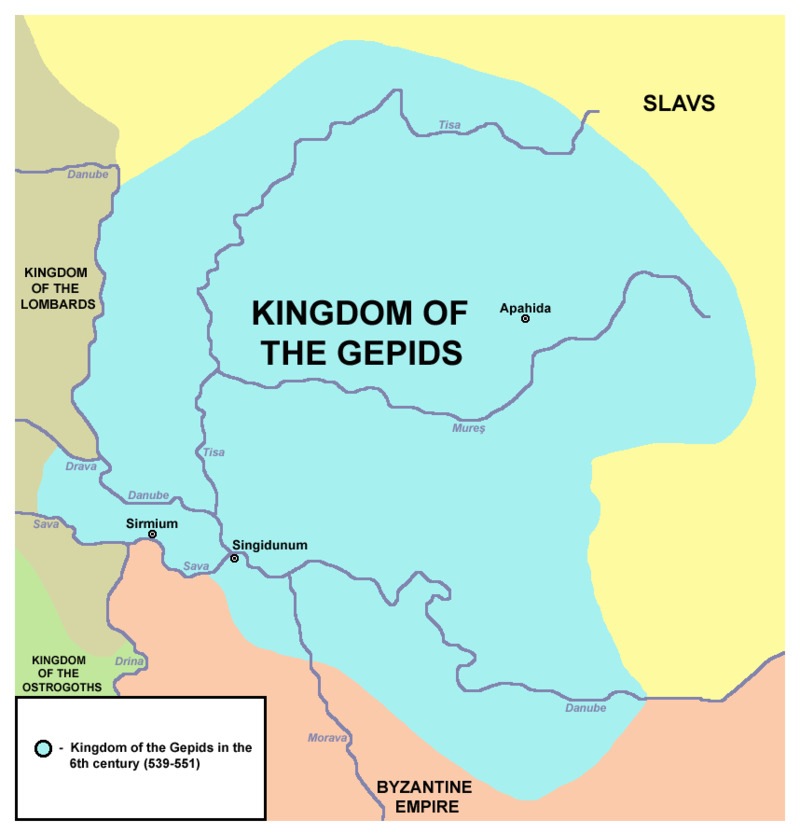
Unfortunately, very little is known about the language of the Gepids, a Germanic tribe that lived in Central Europe during the late Roman period and the early Middle Ages. The Gepids are believed to have spoken an East Germanic language, which was related to Gothic and other Germanic languages of the time.
However, there are no surviving texts or inscriptions in the Gepid language, and the few references to the Gepids in historical sources provide only limited information about their culture and language. As a result, scholars have had to rely on comparative linguistics and the study of other Germanic languages to reconstruct the possible features of the Gepid language.
Some scholars believe that the Gepid language may have been similar to the Gothic language, which is known from a number of surviving texts. However, others have suggested that the Gepid language may have had more in common with other East Germanic languages, such as Burgundian or Vandalic, which are also poorly attested. Overall, the Gepid language remains a subject of ongoing research and speculation among linguists and historians.


.png)